

The storied rivalry between England & Australian teams is shaped by unforgettable players. Here, fans share their favourite stars across the men's Ashes series history.
The Pugnacious Bairstow
On the topic of a favourite player, the choice falls on Jonny Bairstow. His career during the Ashes aptly captures the triumphs and tribulations of an England player. It started with the 2013 series, when he tempered his natural instincts to dig in alongside the experienced Ian Bell. That winter, he stepped up as a replacement for gloveman the injured Matt Prior, facing the formidable Mitchell Johnson having a lack of red-ball cricket for months.
He had an Ashes-winning comeback in the 2015 series , plus is the sole England batter with two away Ashes centuries after 2011, a feat accomplished in spite of ferocious media attention. A poor series followed in 2019, though it featured a vital contribution in Headingley assisting the famous run chase by Stokes and Leach. After returning for 2023, a stunning unbeaten 99 in Old Trafford would have been robbed of a match-winning status by inclement rain.
The Inimitable Syd Barnes
Few bowlers inspire such awe like the wonderful Syd Barnes. His figures of 13 wickets in 80 overs during the second Test remains as testament to his genius. One can only wonder how much more he might have achieved if he were a less difficult character to manage. Boasting an incredible haul of 6,229 wickets at a cost of just 8.33 runs, he is regarded by many as the greatest bowler. Studying his statistics in childhood proved completely captivating. What a a glorious bastard, simply incomparable. As cricket administrator Billy Griffith: “What was remarkable regarding him was that all his contemporaries thought him the greatest bowler. There was never a single doubt in their minds.”
The Charismatic Richie Benaud
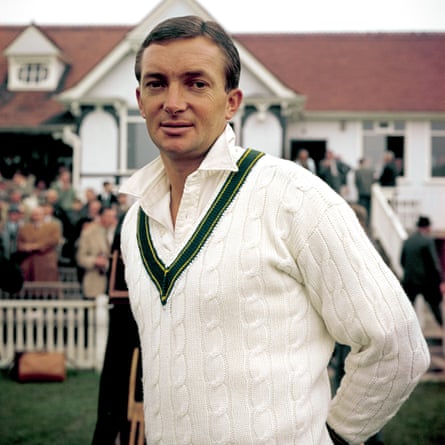
For many, the ultimate player is the legendary Richie Benaud. Starting high school in 1961 aligned with that year's Ashes, where the magic was provided by the glamorous Australian captain. He didn't look like other cricketers; he possessed flair combined with daring, a stark difference to the seemingly traditional approach. An eloquent, commanding captain who arrived known for attacking, thrilling cricket.
Memories of that summer, when a lifelong love affair with cricket was formed, focus on the final day at the fourth Test. Watching intently the broadcast, the viewer saw the home side require 256 to win. A good start had Ted Dexter play a widely acclaimed a magnificent knocks. Yet he fell for 76, caught by wicketkeeper Wally Grout bowled by Benaud. Hope remained as skipper Peter May arriving to bat. A delivery from Benaud saw May steer it to leg. The next ball, Benaud bowled again outside leg, the ball spun viciously from the rough and hit the stumps. May was out for zero, the hush palpable. Benaud won the match taking six for 70 and the visitors retained the Ashes. A moment of bittersweet feelings—wanting an England win yet in awe of an undeniable champion.
The Indefatigable Ian Botham
He is England's finest all-rounder. Indefatigable, inspirational, exceptional. Remember his heroics at Headingley in '81, Old Trafford 1981, the triumphant 1986-87 Australian tour, and his iconic comment directed at Merv Hughes. A hero both for his charity work but also his immense fortitude.
The Underrated Harry Boyle
History often overlooks figures like Harry Boyle, who should rightfully be in any list of key cricketers of the rivalry. He was Fred Spofforth's bowling partner in the iconic Oval Test of 1882, and his contribution was as vital as Spofforth's to secure the win. Indeed, he was the one who dismissed tailender Edmund Peate to clinch that historic game. Although Fred Spofforth is rightly hailed as the pioneer of pace bowling, his teammate was modest and retiring, always putting the team first. This modesty resulted in his memory becoming overshadowed, even though at his passing widely recognised as a pivotal personality in the sport's development.
Don Bradman
The answer must be Sir Don Bradman. Whilst leg-spinner Shane Warne stands as a giant, the sheer weight of runs Bradman accumulated versus England, coupled with his shrewd captaincy, establishes him not just as a cricket legend but as the only possible answer. A batting average just shy of 90, two triple centuries, including a magnificent double after a bold decision to flip the lineup to protect his main batters on a damp pitch in Melbourne during 1937.
Though not from his era, every enthusiast becomes familiar about his deeds from the 1930s and the Invincibles tour. Whilst most remember the final duck preventing a 100+ average, others cherish images of his practice relentlessly using a water tank, or seeing him endure the vicious Bodyline tactics to still average 56 runs per innings in a torrid Ashes for batters. He remains the ultimate batsman in many eyes.
The Cerebral Mike Brearley
He elevated the craft of leadership, so vital in cricket, to a new level. He epitomised his era by demonstrating that success against Australia, particularly down under, needed more than hard work and power. He motivated with considered, astute guidance, fostering a culture in which his players' true qualities thrived. His reading of the game, the match state, and individuals excelled precisely when a change in momentum was required.
This was a beautifully subtle, subtle method {that challenged|contradict


